
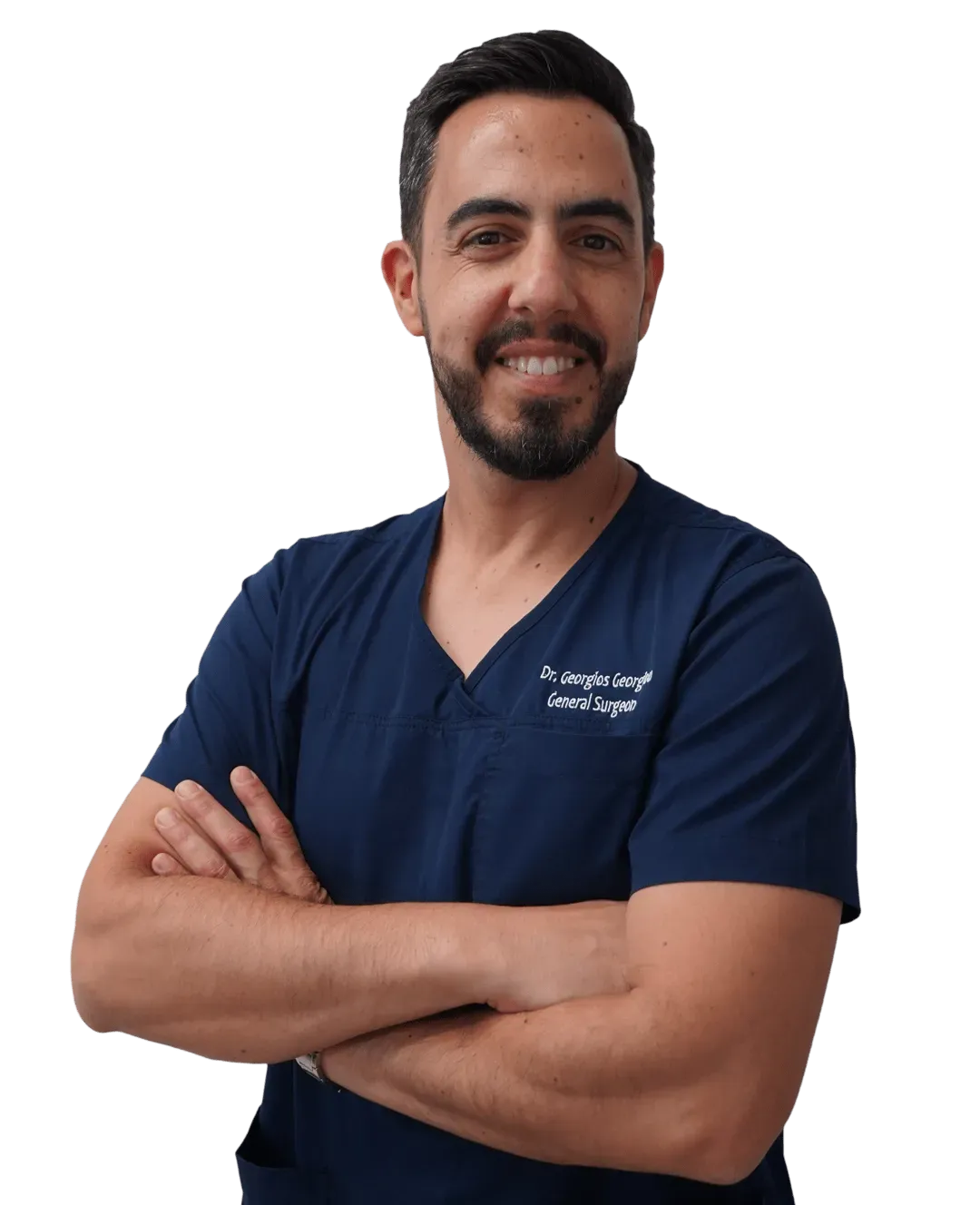
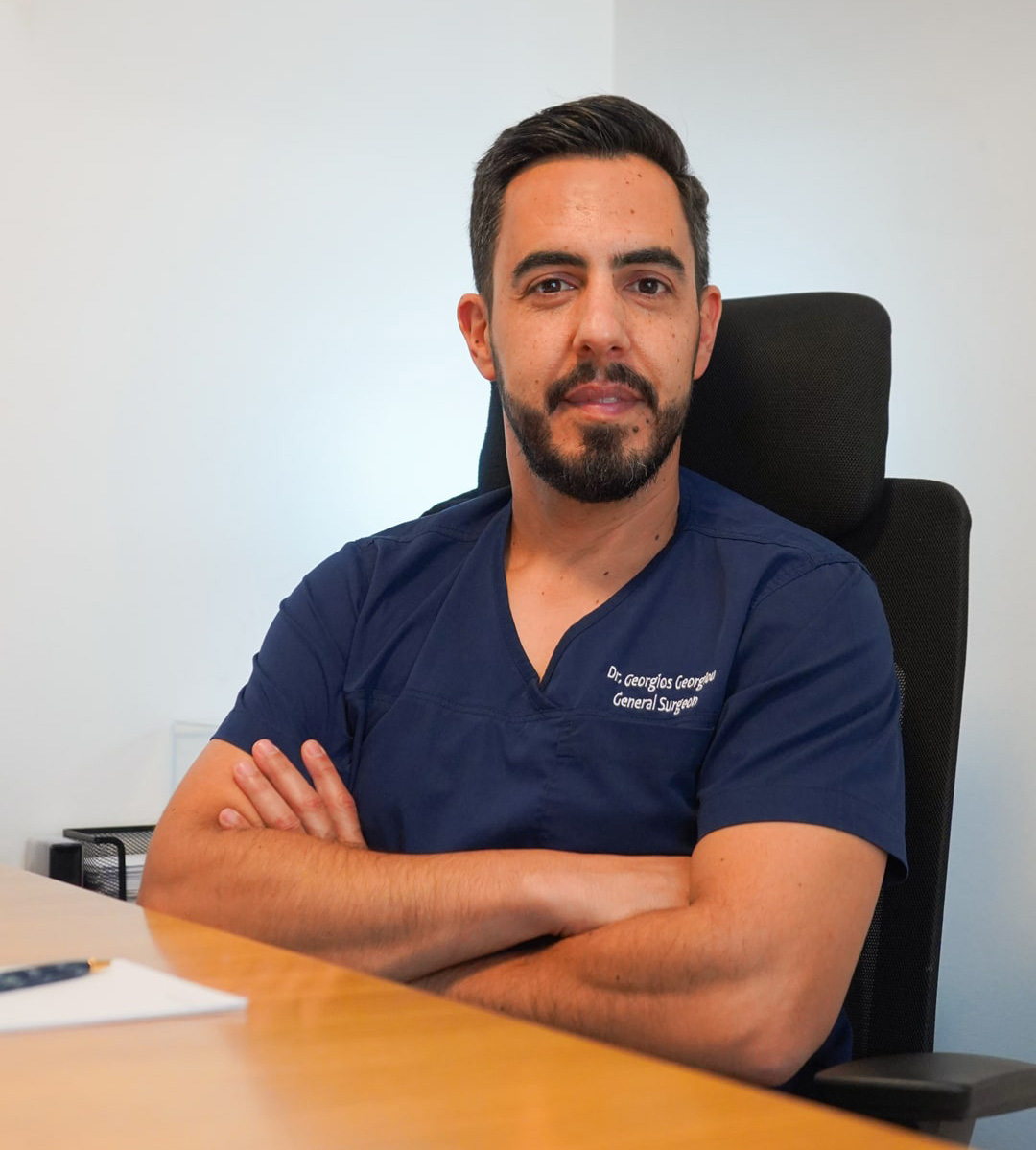

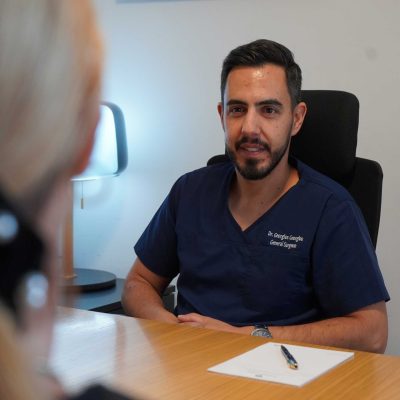
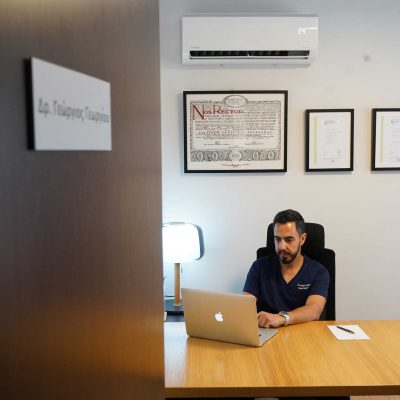
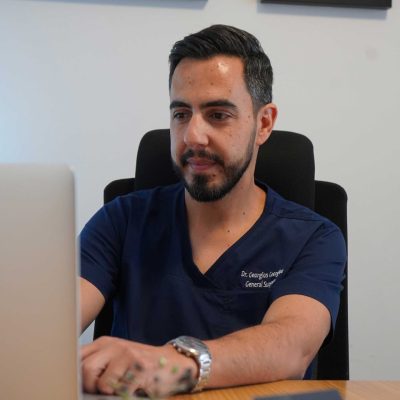
I am Dr. Georgios Georgiou, a Consultant General Surgeon and Proctologist trained in Germany. Together with my dedicated team, I am committed to delivering exceptional surgical care with a focus on safety, accuracy, and compassion. We understand that medical visits often raise questions or concerns, which is why we prioritize clear, personalized communication. We take the time to explain every step of the process thoroughly, ensuring you feel comfortable, informed, and confident from the very first consultation.
Whether you are here for a routine check-up or a surgical procedure, our mission is to provide you with the highest quality care, customized to your individual needs, utilizing the most advanced techniques and modern technology.
Thank you for trusting us with your health. We are here to support you every step of the way.
Dr. Georgios Georgiou was born and raised in Limassol, Cyprus. In 2002, he graduated from Laniteio Lyceum A’ and, after completing his military service, was accepted in the Medical School of the University of Debrecen in Hungary. He completed his studies within the prescribed time, distinguished for his academic performance, and in 2010 he obtained his Doctor of Medicine degree.
After completing his medical studies, Dr. Georgiou moved to Germany, where he began his specialization in General Surgery. He initially worked at the Department of General and Gastrointestinal Surgery at Brüderkrankenhaus St. Josef in Paderborn, and subsequently at the Department of Thoracic, General, and Gastrointestinal Surgery at Städtisches Klinikum in Solingen. In 2018, following successful completion of the official specialty examinations, he was awarded the title of Specialist in General Surgery by the Medical Association of North Rhine-Westphalia (Ärztekammer Nordrhein-Westfalen).
Subsequently, he served as a Senior Registrar (Consultant Surgeon) at the Department of General, Gastrointestinal, and Oncological Surgery at Sana Krankenhaus Gerresheim in Düsseldorf. During this period, he developed a strong interest in Proctology, with a particular focus on the diagnosis and surgical management of anal diseases. As a recognition of his expertise, he was awarded the title of Specialist in Proctology by the Medical Association of North Rhine-Westphalia (Ärztekammer Nordrhein-Westfalen) in 2021. Additionally, he served as a surgical trainer, imparting his expertise to the clinic’s resident physicians.
Shortly before the end of 2022, Dr. Georgiou returned to his hometown, and since early 2023, he has maintained his private practice in Limassol. Since October 2023, he has been an external associate of the Ygia Polyclinic Private Hospital, where he performs a significant number of laparoscopic and proctological surgeries, applying the most modern surgical techniques.
During his twelve-year training and work experience in Germany, Dr. Georgiou specialized in the most modern and advanced methods of treating diseases in his field, such as laparoscopic (minimally invasive) surgery. He has conducted numerous surgeries, both open and laparoscopic, on patients with cancer or other conditions of the large and small intestine, as well as surgeries on patients with proctological diseases and conditions from the entire spectrum of general surgery, such as abdominal wall hernias and gallbladder diseases.
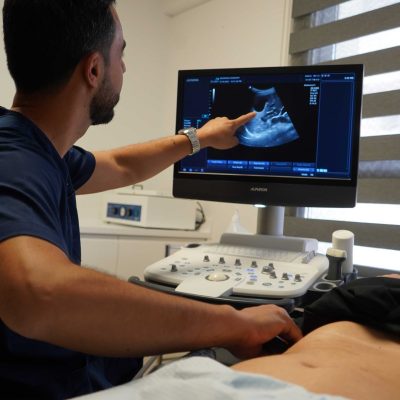
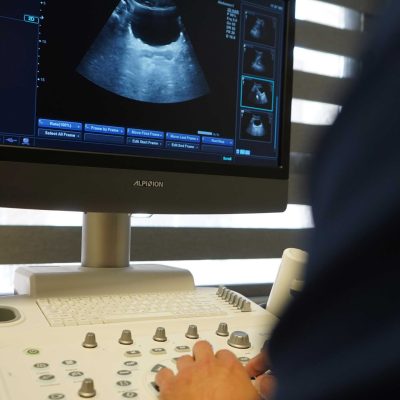
Dr. Georgiou has participated in numerous surgical and proctological conferences in Germany and internationally, enriching his knowledge and practical skills. He holds certified qualification for performing ultrasound in parts of the trunk, chest, and abdominal region from the German Ultrasound Society (DEGUM – Deutsche Gesellschaft für Ultraschall in der Medizin), as well as emergency medicine certification (Fachkunde Rettungsdienst) from the Medical Association of Westphalia-Lippe (Ärztekammer Westfalen-Lippe).
Dr. Georgiou is a member of the German Medical Association (Ärztekammer Nordrhein-Westfalen), the German Surgery Association (Berufsverband der Deutschen Chirurgie), the Cyprus Medical Association, the Hellenic Society of Coloproctology, and the European Hernia Society.
Hemorrhoids are vascular structures in the anal canal that help control continence. They consist of arteries and veins and can become symptomatic when enlarged or inflamed. Common symptoms include painless bleeding during defecation, itching, skin irritation, discomfort, and, in advanced cases, prolapse of hemorrhoidal tissue outside the anus. Hemorrhoids rarely cause pain.
Treatment depends on the symptoms and the degree of the disease and may be conservative (pharmaceutical) or surgical. Surgical treatment options include Rubber Band Ligation, Laser Hemorrhoidoplasty, doppler-guided Hemorrhoidal Artery Ligation with Recto-Anal Repair (HAL-RAR), and traditional hemorrhoidectomy with ultrasound scissors (e.g. Milligan-Morgan procedure).
An anal abscess is a collection of pus that forms near the anus or within the anal sphincter muscles as a result of an infection. It usually causes a painful swelling in the area around the anus, with the skin being hard, red, and warm. More rarely, it may be accompanied by fever or pus discharge from the anus. If an anal abscess is left untreated, there is a high probability of anal fistula formation, making treatment more complicated.
An anal abscess must always be drained surgically
An anal fistula is an abnormal channel between the anal canal and the skin around the anus, often arising from an untreated anal abscess. Rarely, it can be associated with inflammatory conditions like Crohn’s disease. Symptoms include discomfort in the anal area, discharge of foul-smelling fluid from the external skin opening of the fistula, itching, and irritation of perianal skin. Surgical intervention is essential, as it is the only definitive treatment for an anal fistula.
The most prevalent surgical methods used for the treatment of anal fistulas are Seton placement, Ligation of Intersphincteric Fistula Tract (LIFT), Video-Assisted Anal Fistula Treatment (VAAFT), and Fistulectomy.
Condyloma acuminata are benign growths caused by human papillomavirus (HPV), the most common sexually transmitted infection. They appear as small, skin-colored or pigmented protrusions or clusters, of various sizes and shapes in the perianal area and inside the anal canal. The most common symptoms are itching and a burning sensation in the anal area, while sometimes they may bleed. If left untreated, condylomas can grow and multiply, potentially covering large areas. In some cases, they may even progress to cancer.
Treatment options include surgical excision (removal) or destruction with the use of Laser.
Various skin conditions can affect the perianal region, resulting in symptoms such as itching (pruritus ani), redness, pain, and discomfort. These conditions may be caused by infections (bacterial, viral, fungal, or parasitic), irritants (such as chemical agents and diarrhea), or underlying skin diseases like psoriasis, atopic dermatitis (eczema), contact dermatitis, lichen sclerosus, or lichen planus. Additionally, proctological diseases – including hemorrhoid disease, fistulas and fissures – can also cause skin irritation in this area.
Proper diagnosis and tailored treatment are essential to effectively manage these varied conditions and alleviate symptoms.
Anal vein thrombosis, commonly known as thrombosed external hemorrhoid, occurs when a blood clot forms in the veins surrounding the anus. This condition often presents with sudden, intense pain and a firm, bluish lump in the anal area. It is frequently triggered by straining during bowel movements. Other common causes include prolonged sitting, heavy lifting, and pregnancy.
In most cases, anal vein thrombosis can be effectively managed with conservative treatments. However, if the pain becomes severe or unmanageable, a minor procedure may be indicated to remove the clot or the affected vein, providing rapid and significant pain relief.
Anal cancer is relatively rare, accounting for approximately 1-2% of all gastrointestinal cancers. Most cases are associated with HPV infection.
Treatment depends on the stage and location of the tumor and may include radiotherapy, chemotherapy and surgery.
Pilonidal disease is a condition in which cysts, abscesses, or sinus tracts develop in the skin and soft tissue of the cleft of the buttocks. It commonly occurs when hair and debris become trapped under the skin, leading to inflammation and infection. Symptoms of pilonidal disease may include pain, swelling, skin redness, foul odor and discharge of blood or pus. Diagnosis is usually made through physical examination. In some cases, imaging studies like ultrasound may be needed to assess the extent of the disease.
Treatment options range from conservative measures – such as anti-inflammatory medications and antibiotics – to abscess drainage performed under local anesthesia. In more severe or recurrent cases, surgical removal of the cyst is recommended. Surgical treatment options include classical excision (“open excision”), Laser therapy, and cyst removal with skin flap reconstruction (e.g. Karydakis or Cleft-Lift procedure).
A hernia appears as a protrusion on the abdominal wall just beneath the skin. It is the projection of internal organs or fat through a weak point or opening in the muscles of the abdominal wall. Hernias can cause pain or discomfort, especially during physical activity or weight lifting. Various factors can contribute to hernia development, including previous abdominal surgery, weight gain, pregnancy, regular lifting of heavy objects, or chronic cough. The most common types of hernia are inguinal hernia, umbilical hernia, epigastric hernia, and incisional hernia. Less common types include femoral hernia, parastomal hernia, and Spiegel’s hernia. Hernias are usually diagnosed through physical examination and can be confirmed with imaging techniques such as ultrasound or computed tomography (CT scan).
Treatment depends on the size and symptoms. Small, asymptomatic hernias may only require monitoring, while larger or symptomatic hernias typically need surgical repair. The preferred surgical approach is laparoscopic repair, which involves placing a mesh to reinforce the weakened area of the abdominal wall. If laparoscopic surgery is not feasible, an open repair is performed, also utilizing a mesh for reinforcement.
Cholelithiasis is a common condition of the biliary system characterized by the formation of stones in the gallbladder. Contributing factors include an imbalance in bile composition, genetic predisposition, obesity, rapid weight loss, pregnancy, and age (more frequent in older adults). The most common symptoms are pain in the upper right abdomen, which may radiate to the back, along with nausea and vomiting. Diagnosis is typically based on clinical examination and abdominal ultrasound. Serious complications of cholelithiasis can include cholecystitis (inflammation of the gallbladder), bile duct obstruction, and pancreatitis.
Treatment may involve observation without intervention if the gallstones are asymptomatic or surgical removal of the gallbladder (cholecystectomy, performed laparoscopically), if symptoms are present.
Cholecystitis is the inflammation of the gallbladder and is the most common complication of cholelithiasis (Gallstones). Symptoms generally include pain in the upper right abdomen, along with nausea, vomiting, fever, and indigestion (bloating and discomfort after meals).
Treatment involves antibiotics and pain management, but surgical removal of the gallbladder (laparoscopic cholecystectomy) is preferred.
Gallbladder polyps are abnormal tissue growths protruding from the inner lining (mucosa) of the gallbladder. They are usually asymptomatic and often discovered incidentally during imaging tests such as ultrasound conducted for other reasons. The most common polyps are cholesterol polyps, which consist of cholesterol deposits adhering to the mucosa and are considered pseudopolyps. Conversely, true polyps, like adenomatous polyps (adenomas), originate from the mucosa and are hyperplastic lesions with potential for malignant transformation (gallbladder carcinoma). The risk of malignancy increases with polyp size, especially when exceeding 1 cm. Therefore, regular monitoring with annual ultrasounds is recommended, and surgical removal (laparoscopic cholecystectomy) is advised for polyps reaching or surpassing this size threshold.
Various diseases of the large and small intestines can be treated either laparoscopically (minimally invasive) or through open surgery. The most common conditions include:
Treatment of various skin and soft tissue conditions, including:
In cases where spleen removal is necessary – such as in severe traumatic injury, blood disorders (for example idiopathic thrombocytopenic purpura), or malignant tumors – it can be performed either laparoscopically (minimally invasive) or through an open surgical procedure, depending on the specific clinical situation.
In cases where a biopsy of a lymph node (excisional biopsy) is necessary to establish a diagnosis, it can be performed either laparoscopically (minimally invasive) or through an open surgical procedure, depending on the lymph node’s location.
A peritoneal dialysis catheter is a flexible tube inserted into the abdominal cavity to allow for peritoneal dialysis, a treatment for kidney failure. This catheter provides access to the peritoneal cavity, where a special dialysis solution is introduced to remove waste products and excess fluid from the blood through the lining of the abdomen (peritoneum).
The catheter is placed surgically, either using an open procedure or laparoscopically (minimal invasive method).
A Port-a-Cath is a permanent central venous access device used for patients requiring long-term intravenous therapy, such as chemotherapy or parenteral nutrition.
The catheter is surgically implanted under local or general anesthesia, providing a reliable and comfortable means for frequent or continuous access to the bloodstream.
Hemorrhoids are vascular structures in the anal canal that help control continence. They consist of arteries and veins and can become symptomatic when enlarged or inflamed. Common symptoms include painless bleeding during defecation, itching, skin irritation, discomfort, and, in advanced cases, prolapse of hemorrhoidal tissue outside the anus. Hemorrhoids rarely cause pain.
Treatment depends on the symptoms and the degree of the disease and may be conservative (pharmaceutical) or surgical. Surgical treatment options include Rubber Band Ligation, Laser Hemorrhoidoplasty, doppler-guided Hemorrhoidal Artery Ligation with Recto-Anal Repair (HAL-RAR), and traditional hemorrhoidectomy with ultrasound scissors (e.g. Milligan-Morgan procedure).
An anal fissure is a longitudinal tear in the mucous lining of the anal canal. It typically causes severe pain during and after bowel movements, often described as a burning sensation, which can last from minutes to hours. Bleeding during defecation is also common. The pain and bleeding are often mistaken for hemorrhoidal disease. Additionally, a feeling of “tightness” due to sphincter muscle spasm may occur.
Treatment options include conservative measures (such as topical medications) or surgical intervention like Botulinum toxin (Botox) injection into the sphincter muscle, fissurectomy, or advancement flap.
An anal abscess is a collection of pus that forms near the anus or within the anal sphincter muscles as a result of an infection. It usually causes a painful swelling in the area around the anus, with the skin being hard, red, and warm. More rarely, it may be accompanied by fever or pus discharge from the anus. If an anal abscess is left untreated, there is a high probability of anal fistula formation, making treatment more complicated.
An anal abscess must always be drained surgically
An anal fistula is an abnormal channel between the anal canal and the skin around the anus, often arising from an untreated anal abscess. Rarely, it can be associated with inflammatory conditions like Crohn’s disease. Symptoms include discomfort in the anal area, discharge of foul-smelling fluid from the external skin opening of the fistula, itching, and irritation of perianal skin. Surgical intervention is essential, as it is the only definitive treatment for an anal fistula.
The most prevalent surgical methods used for the treatment of anal fistulas are Seton placement, Ligation of Intersphincteric Fistula Tract (LIFT), Video-Assisted Anal Fistula Treatment (VAAFT), and Fistulectomy.
Condyloma acuminata are benign growths caused by human papillomavirus (HPV), the most common sexually transmitted infection. They appear as small, skin-colored or pigmented protrusions or clusters, of various sizes and shapes in the perianal area and inside the anal canal. The most common symptoms are itching and a burning sensation in the anal area, while sometimes they may bleed. If left untreated, condylomas can grow and multiply, potentially covering large areas. In some cases, they may even progress to cancer.
Treatment options include surgical excision (removal) or destruction with the use of Laser.
Various skin conditions can affect the perianal region, resulting in symptoms such as itching (pruritus ani), redness, pain, and discomfort. These conditions may be caused by infections (bacterial, viral, fungal, or parasitic), irritants (such as chemical agents and diarrhea), or underlying skin diseases like psoriasis, atopic dermatitis (eczema), contact dermatitis, lichen sclerosus, or lichen planus. Additionally, proctological diseases – including hemorrhoid disease, fistulas and fissures – can also cause skin irritation in this area.
Proper diagnosis and tailored treatment are essential to effectively manage these varied conditions and alleviate symptoms.
Anal vein thrombosis, commonly known as thrombosed external hemorrhoid, occurs when a blood clot forms in the veins surrounding the anus. This condition often presents with sudden, intense pain and a firm, bluish lump in the anal area. It is frequently triggered by straining during bowel movements. Other common causes include prolonged sitting, heavy lifting, and pregnancy.
In most cases, anal vein thrombosis can be effectively managed with conservative treatments. However, if the pain becomes severe or unmanageable, a minor procedure may be indicated to remove the clot or the affected vein, providing rapid and significant pain relief.
Anal cancer is relatively rare, accounting for approximately 1-2% of all gastrointestinal cancers. Most cases are associated with HPV infection.
Treatment depends on the stage and location of the tumor and may include radiotherapy, chemotherapy and surgery.
Pilonidal disease is a condition in which cysts, abscesses, or sinus tracts develop in the skin and soft tissue of the cleft of the buttocks. It commonly occurs when hair and debris become trapped under the skin, leading to inflammation and infection. Symptoms of pilonidal disease may include pain, swelling, skin redness, foul odor and discharge of blood or pus. Diagnosis is usually made through physical examination. In some cases, imaging studies like ultrasound may be needed to assess the extent of the disease.
Treatment options range from conservative measures – such as anti-inflammatory medications and antibiotics – to abscess drainage performed under local anesthesia. In more severe or recurrent cases, surgical removal of the cyst is recommended. Surgical treatment options include classical excision (“open excision”), Laser therapy, and cyst removal with skin flap reconstruction (e.g. Karydakis or Cleft-Lift procedure).
A hernia appears as a protrusion on the abdominal wall just beneath the skin. It is the projection of internal organs or fat through a weak point or opening in the muscles of the abdominal wall. Hernias can cause pain or discomfort, especially during physical activity or weight lifting. Various factors can contribute to hernia development, including previous abdominal surgery, weight gain, pregnancy, regular lifting of heavy objects, or chronic cough. The most common types of hernia are inguinal hernia, umbilical hernia, epigastric hernia, and incisional hernia. Less common types include femoral hernia, parastomal hernia, and Spiegel’s hernia. Hernias are usually diagnosed through physical examination and can be confirmed with imaging techniques such as ultrasound or computed tomography (CT scan).
Treatment depends on the size and symptoms. Small, asymptomatic hernias may only require monitoring, while larger or symptomatic hernias typically need surgical repair. The preferred surgical approach is laparoscopic repair, which involves placing a mesh to reinforce the weakened area of the abdominal wall. If laparoscopic surgery is not feasible, an open repair is performed, also utilizing a mesh for reinforcement.
Cholelithiasis is a common condition of the biliary system characterized by the formation of stones in the gallbladder. Contributing factors include an imbalance in bile composition, genetic predisposition, obesity, rapid weight loss, pregnancy, and age (more frequent in older adults). The most common symptoms are pain in the upper right abdomen, which may radiate to the back, along with nausea and vomiting. Diagnosis is typically based on clinical examination and abdominal ultrasound. Serious complications of cholelithiasis can include cholecystitis (inflammation of the gallbladder), bile duct obstruction, and pancreatitis.
Treatment may involve observation without intervention if the gallstones are asymptomatic or surgical removal of the gallbladder (cholecystectomy, performed laparoscopically), if symptoms are present.
Cholecystitis is the inflammation of the gallbladder and is the most common complication of cholelithiasis (Gallstones). Symptoms generally include pain in the upper right abdomen, along with nausea, vomiting, fever, and indigestion (bloating and discomfort after meals).
Treatment involves antibiotics and pain management, but surgical removal of the gallbladder (laparoscopic cholecystectomy) is preferred.
Gallbladder polyps are abnormal tissue growths protruding from the inner lining (mucosa) of the gallbladder. They are usually asymptomatic and often discovered incidentally during imaging tests such as ultrasound conducted for other reasons. The most common polyps are cholesterol polyps, which consist of cholesterol deposits adhering to the mucosa and are considered pseudopolyps. Conversely, true polyps, like adenomatous polyps (adenomas), originate from the mucosa and are hyperplastic lesions with potential for malignant transformation (gallbladder carcinoma). The risk of malignancy increases with polyp size, especially when exceeding 1 cm. Therefore, regular monitoring with annual ultrasounds is recommended, and surgical removal (laparoscopic cholecystectomy) is advised for polyps reaching or surpassing this size threshold.
Various diseases of the large and small intestines can be treated either laparoscopically (minimally invasive) or through open surgery. The most common conditions include:
In cases where spleen removal is necessary – such as in severe traumatic injury, blood disorders (for example idiopathic thrombocytopenic purpura), or malignant tumors – it can be performed either laparoscopically (minimally invasive) or through an open surgical procedure, depending on the specific clinical situation.
In cases where a biopsy of a lymph node (excisional biopsy) is necessary to establish a diagnosis, it can be performed either laparoscopically (minimally invasive) or through an open surgical procedure, depending on the lymph node’s location.
A peritoneal dialysis catheter is a flexible tube inserted into the abdominal cavity to allow for peritoneal dialysis, a treatment for kidney failure. This catheter provides access to the peritoneal cavity, where a special dialysis solution is introduced to remove waste products and excess fluid from the blood through the lining of the abdomen (peritoneum).
The catheter is placed surgically, either using an open procedure or laparoscopically (minimal invasive method).
A Port-a-Cath is a permanent central venous access device used for patients requiring long-term intravenous therapy, such as chemotherapy or parenteral nutrition.
The catheter is surgically implanted under local or general anesthesia, providing a reliable and comfortable means for frequent or continuous access to the bloodstream.
What they said about us.
I visited the doctor for a second opinion and further advice, and I truly can't recommend him enough. He was attentive, patient, precise, and particularly thorough in his examinations. Throughout the visit, I felt that he genuinely cared about my well-being. Thank you very much, Dr. Georgiou.
Michel VedrenneDr. Georgios is an exceptional healthcare professional who provided me with top-tier medical care. His boundless kindness and willingness to help go hand in hand with his professionalism, making every visit a high-quality experience. I truly appreciate his dedication to his work. I wholeheartedly recommend him!
Eldar MustafinI wholeheartedly recommend visiting Dr. Georgios Georgiou. I saw him when I needed surgery, and he did an excellent job! From the very first visit, I felt that he surrounded me with care and attention.
Elena MakriI came with my partner, who was dealing with an unpleasant issue. We met the kindest, sweetest, most patient, and professional doctor. He was there for us from the very first moment and always available to answer our questions. We sincerely thank you, doctor.
Bayer Tel

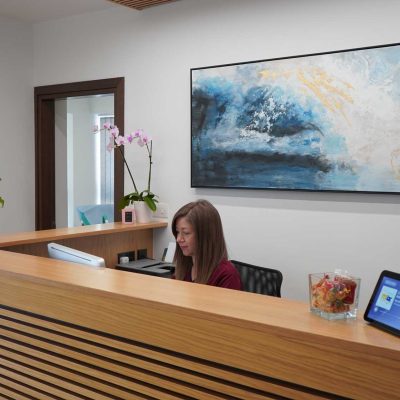
We are here to support you, listen to your feedback, or schedule your appointment. Fill out the form, and we will assist you promptly, confirming your visit with our doctor.
57 Agiou Spyridonos and 26 Ethnikis Antistaseos, Limassol 3025, Cyprus
+357 25 250567
Monday - Friday 09:00 - 18:00
(4.8) 12k+ ratings on google
Agiou Spyridonos 57 and, Ethnikis Antistaseos 26, Limassol 3025, Cyprus
Monday - Friday 09:00 - 18:00
Vasilieos Georgiou II, Paphos 8010, Cyprus
Friday 16:00 - 19:00